Community-First Development: This Land Was Made For You And Me
Site selection shapes the quality of life for its future residents and the final price of every lot.
Start reading

The housing crisis isn't a shortage of homes, it's a shortage of housing-ready land, and that's the problem New Story exists to solve.
UN-Habitat projects that by 2030, close to 3 billion people — about two out of every five people on Earth — will be without adequate housing. To keep pace with that need, the world would have to build 96,000 new affordable homes every day for the next four years (UN Habitat/World Bank).
New Story’s team has spent enough time in communities across Mexico to know that the number in this statistic isn't just an abstraction. It's the family renting a single room for three generations because there is nowhere else to go. It's a single mother living in an informal settlement with no title, no water line, and no legal claim to the ground on which she lives. It's grandparents who have been saving for a home for decades and still have no affordable options.
Here's what surprises people when I explain what we do: this isn't fundamentally a construction problem. It's a land access problem.
This scarcity isn't physical. There is no shortage of land in Latin America. What's missing is the institutional machinery that turns raw land into something a family can legally build on: land use policy that isn't fragmented across jurisdictions, financing for basic infrastructure like water and roads, permitting processes that don't stall for years, and municipal capacity to move projects forward.
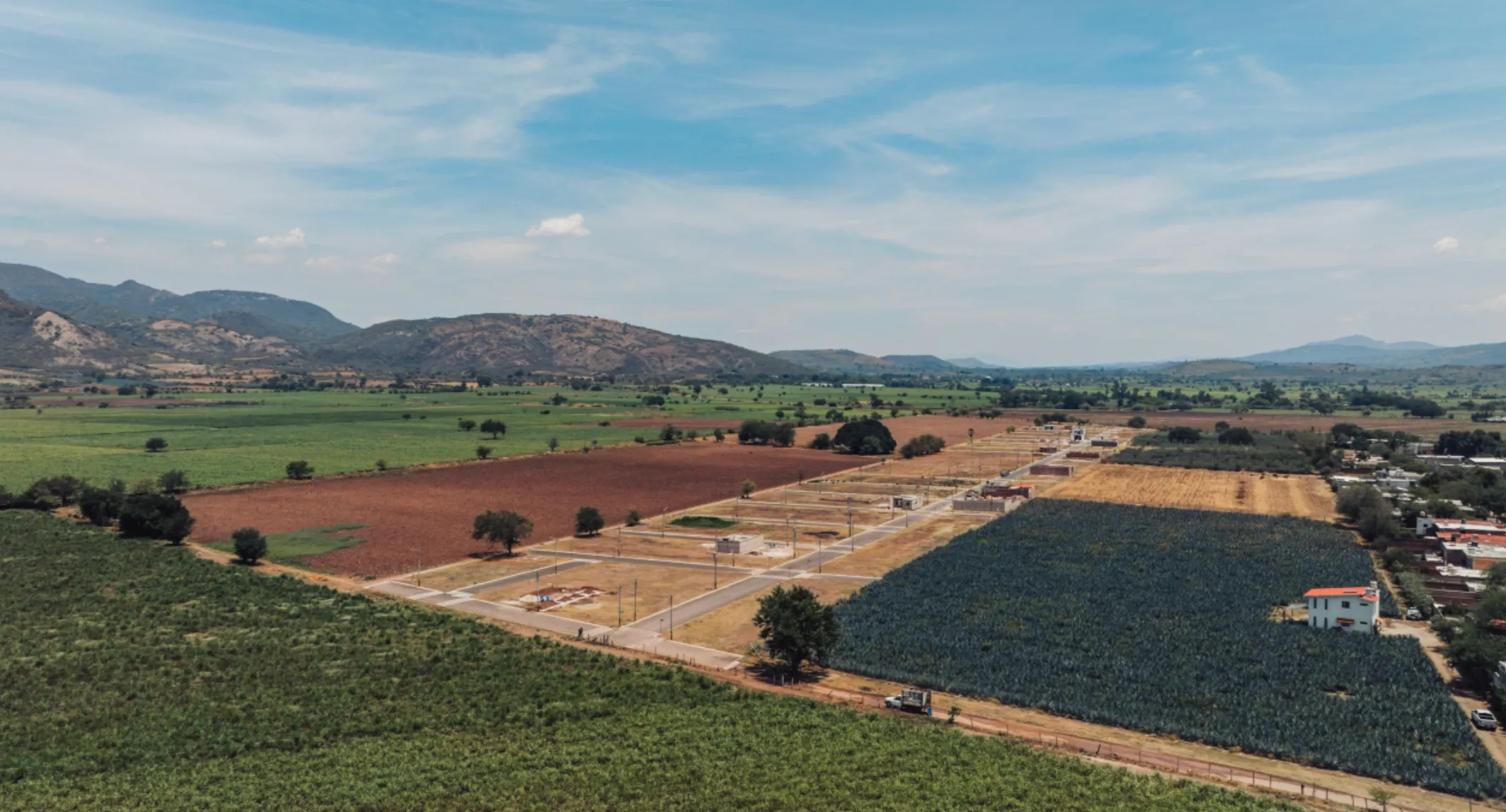
In Mexico alone, roughly 2.2 million households want to buy land to build a home, according to the country’s largest housing finance institution (INFONAVIT). Yet in 2023, INFONAVIT's own land financing program placed just 3,200 loans, totaling around $72 million USD, and almost none of that reached low-income families (INFONAVIT). The demand is enormous, but what's actually missing is land that's affordable, serviced, legally secure, and well located — the four conditions that turn a plot of dirt into something a family can safely build a life on. We'll call that combination housing-ready land throughout this piece, and its supply across Latin America is almost nonexistent.
That gap is not unique to Mexico. Across Latin America, low-income families are systematically locked out of formal land markets. Without access to housing-ready land, families are pushed into informal settlements: no title, no infrastructure, no financing, and no path into the systems that could actually help them build safely. A family can be resourceful, hardworking, and fully capable of building a home, and still have no formal way to start, because housing-ready land was never available to them.
Global charitable giving totals somewhere between two and three trillion dollars a year, across every cause on earth: health, education, disaster relief, the arts, etc. (NonprofitPro). One widely cited estimate puts the investment needed to close the world's affordable housing gap at around $16 trillion (McKinsey Global Institute). Put simply: even if every dollar of global philanthropy were redirected to housing alone, it still wouldn't be enough. That gap shows why grants and donations are essential, but they were never built to operate at the scale this problem demands.
That's the uncomfortable math underneath the housing crisis. It isn’t a shortage of good intentions. It's a mismatch between the tools we've relied on and the size of the problem in front of us.
We believe the housing crisis in Latin America is not primarily a construction problem. It's a systems problem with a clear payoff for families: millions are already capable and motivated, and are investing in their own housing journeys. What's missing is access to housing-ready land, financing that fits how they actually build, and support designed around their reality rather than a system built for someone else.
Land is the starting point. A titled plot isn't just an address — it's legal certainty, it's collateral, it's the first asset on which a family can build, literally and financially. Everything else, the home, the equity, the stability, passed to the next generation, follows from that first step. What no family can do on their own is create land that's serviced, legally secure, and well located. That takes infrastructure investment, government coordination, and capital at a scale no household can access alone. Land is the one piece of the equation only a system can produce. It also touches nearly every dimension UN-Habitat uses to define adequate housing: secure tenure, access to basic services, a sound location, and a stable foundation for everything a family builds afterward.
We don't build homes. We build the conditions for families to secure their own, starting with the land beneath their feet and the path to everything that follows.
Our approach has two pillars that reinforce each other.
The first pillar: We use philanthropic capital to work directly with families. Even once a family has purchased land, we've learned that turning it into a finished home isn't automatic. So we work alongside families in our communities to understand, in real time, what's actually standing in their way, whether that's financing that doesn't fit how they build or a lack of technical support, and we turn that into evidence that developers, financial institutions, and municipalities can adopt and scale on their own. Our job is to prove out what works, not to be the only ones who ever deliver it.
The second pillar: We use investment capital to scale the supply of housing-ready land. Through an investment fund, we work with local developers and municipal partners to scale the supply of affordable, serviced land itself, deploying capital instead of just donations so that formal land ownership becomes available to far more families than grants alone could ever reach.
Investment capital to widen the door. Philanthropy to understand what happens once someone walks through it. Neither works at this scale alone, which is exactly why we've built both.
I look forward to sharing more about what that actually looks like: the partnerships, the evidence we're gathering, and the families whose lives are changing because someone finally addressed the root of the problem rather than another symptom. But it starts with naming the problem honestly. Land access is the housing crisis most people haven't heard of yet. It's the one New Story has chosen to dedicate itself to solving.
Sign up for our newsletter