Cool by Design: Building with Bamboo
With our partners, we built a bamboo home to test an idea. We're still leaning, and the early results are promising.
Empieza a leer

With our partners, we built a bamboo home to test an idea. We're still leaning, and the early results are promising.
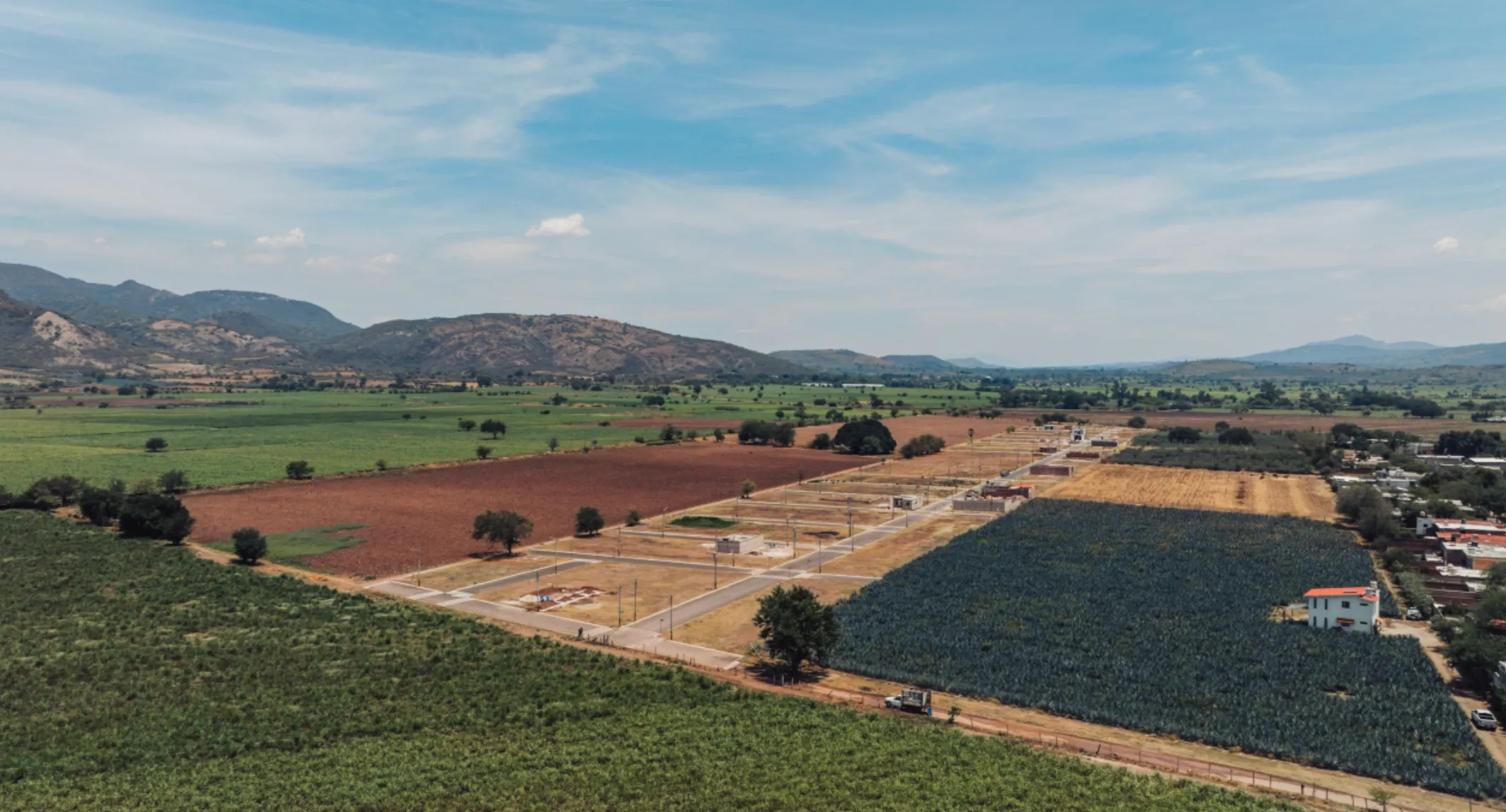
Earlier this month, families in Ahualulco de Mercado walked through a house that had not existed a few weeks before. The house took shape on public land in the community of El Porvenir, land the municipality made available for the project. Once its work as a demonstration home is done, the mayor’s current vision is for the home to eventually serve as a community health clinic for families in El Porvenir and neighboring communities. For now, it is something else: a demonstration of what bamboo can do.
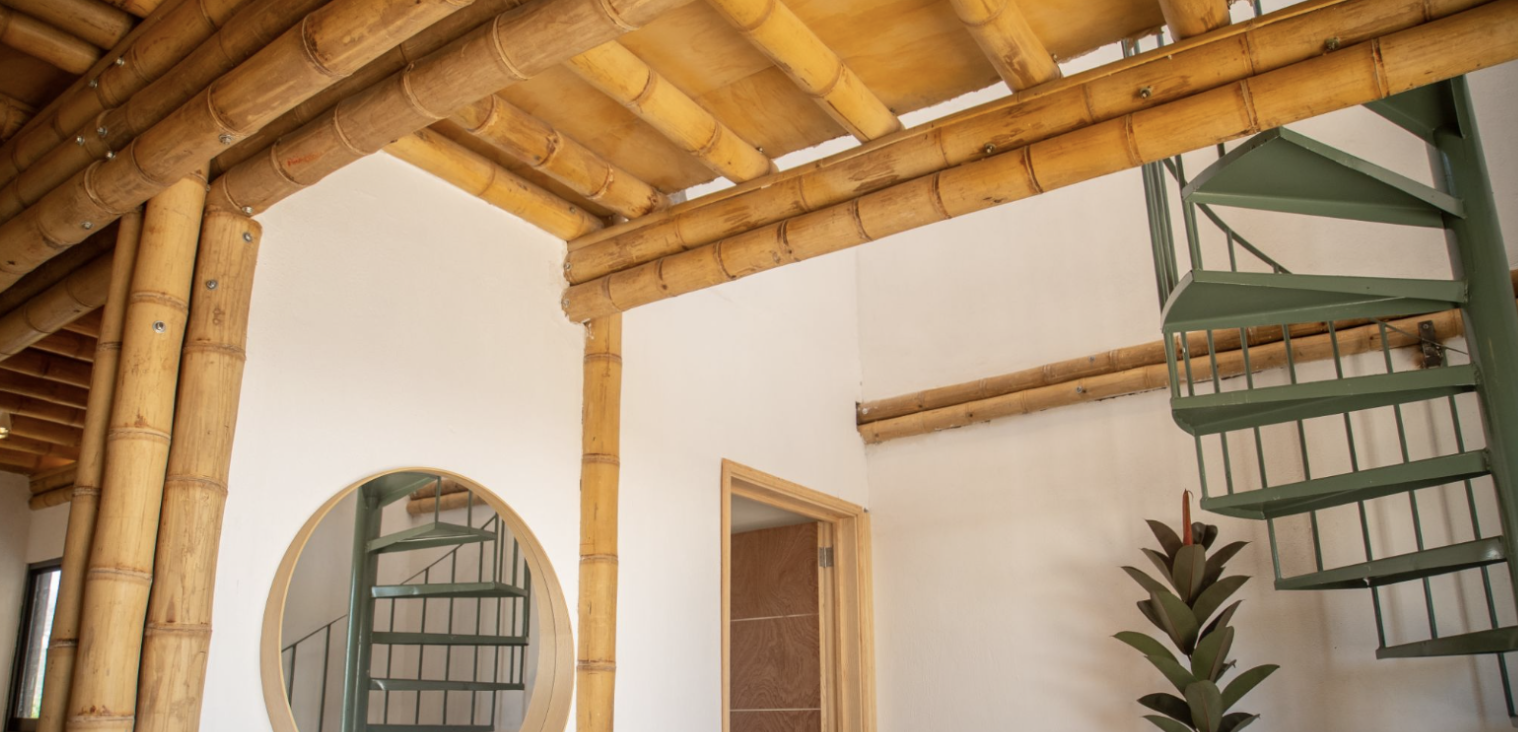
New Story built this bamboo model home, funded by a grant from the Ballmer Family and developed with our partners Casa Congo and AtelierOne, to test an idea. Bamboo is often mistaken for a rustic, makeshift option — something you build with when you have no other choice. What families walked through on August 1st was the opposite: a finished, staged home with furniture in every room, assembled by a small team of local masons in a matter of weeks, with an estimated 69% smaller carbon footprint than a comparable concrete home.
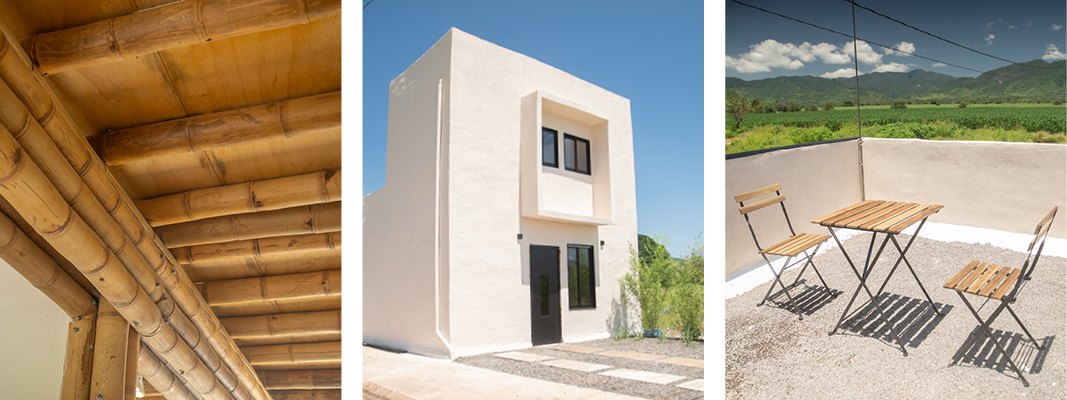
The building material is crucial because this is an earthquake zone, and we didn’t have to wait long for a reminder. The timing was almost too on the nose: on July 17th, the same day local masons gathered to train in the technique, a magnitude 7.3 earthquake struck off the southern coast of Mexico. It was felt by millions of people and marked the second major earthquake the country has experienced in six months. It was a reminder of exactly why this pilot exists.
Seismic force comes down to mass: the more weight a structure has to move, the more violently it moves when the ground shakes beneath it (ScienceDirect). The bamboo home is an engineered structural system designed to take advantage of bamboo's low weight and flexibility. Its lighter structure can help reduce the forces a home must withstand during an earthquake, contributing to a more resilient design. This doesn't make an earthquake harmless, and it isn't the material alone doing the work. But it does mean the home responds to shaking in a fundamentally different way, and that difference is exactly what we wanted families to see for themselves.
Visitors kept describing it the same way: a pocket of relief from the heat outside. Interior temperatures in our bamboo model home run about 10 degrees Fahrenheit cooler than a standard build, no electricity required, which matters enormously in a region where cooling a home usually means paying for it every month. Part of that comes from the material itself, and part of it is deliberate design: the front and back doors are aligned to create a breezeway straight through the home, so air moves through the space instead of sitting in it.
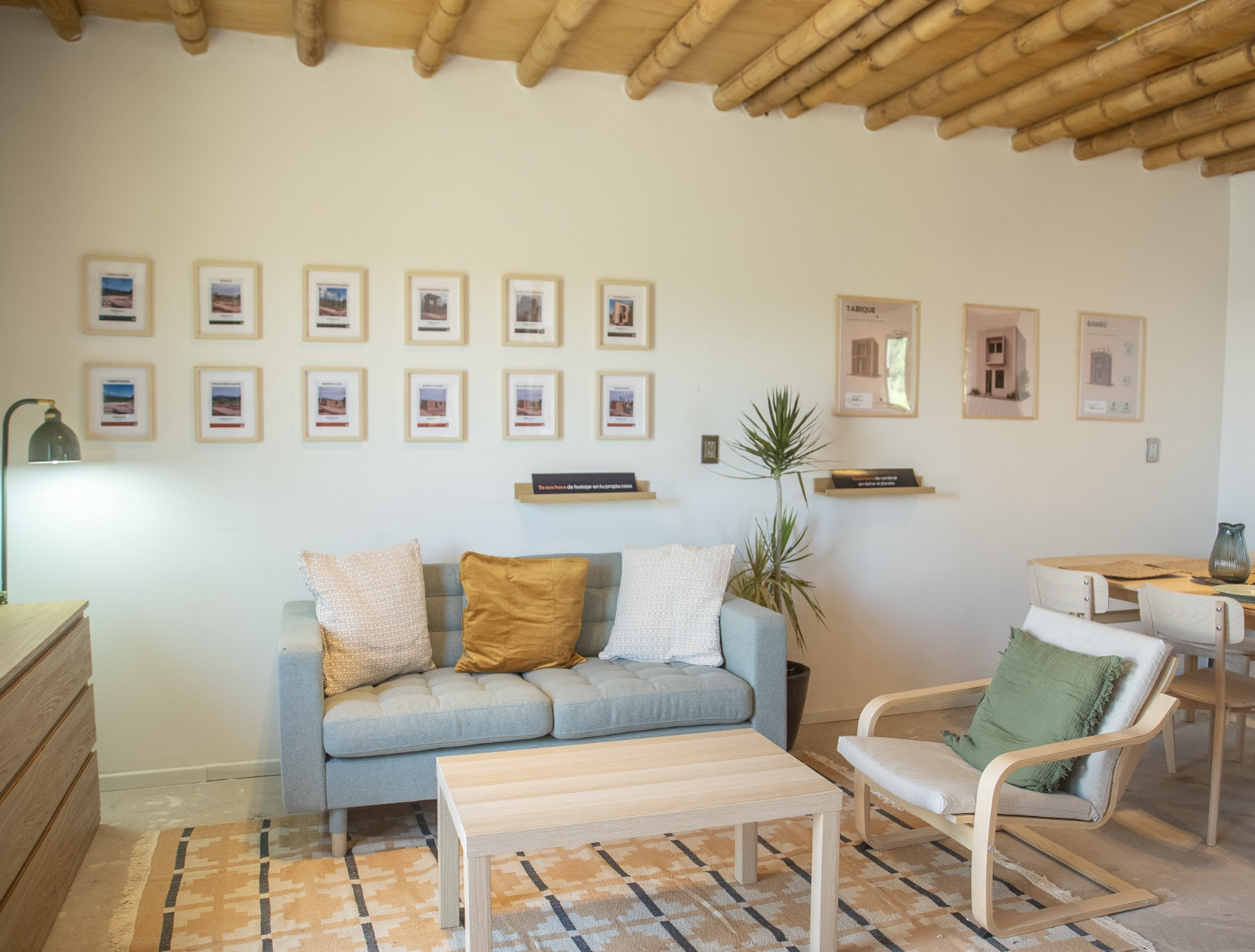
We staged the inside of the home with furniture, so families didn’t only see the structure, they were able to imagine their future homes. New Story team members Claudia Acuña and Vic Mendoza joined for the open house, alongside members of two local credit unions and representatives from local cajas (community savings and loan cooperatives that many families here already trust for credit). Having them there mattered, because whether a family can choose this path often comes down to whether financing is available in the first place. Our hope is that seeing the home firsthand will move these local partners to build financial products around it, so a bamboo home becomes something a family can actually finance, not just admire.
This model home is part of our broader climate-smart housing initiative. Up to five families in the area can now choose to build a bamboo home of their own, on their own lot, with New Story subsidizing a portion of the cost. What happens next depends on what we learn: whether families choose it, and whether developers, lenders, and municipal authorities move with them, opening the door for Casa Congo to take the product to market in Jalisco.

Suscríbase a nuestro boletín